
Are paid clinical trials safe?
How we make money: when you sign up for an offer we recommend, we may earn a commission. It costs you nothing extra, and it never decides what makes the list — more on how this works.
Paid clinical trials are heavily regulated and carry real protections: an independent review board must approve and oversee every study, and you must give informed consent before anything happens. But no trial is risk-free, and the uncertainty is highest in early-phase studies. So the honest answer isn’t a flat yes or no — trials are far safer than most people assume, and your job is to understand the specific study before you agree to it. Here’s what protects you, and how to decide.
The safeguards that protect participants
Clinical research in the U.S. runs on a system built specifically to protect the people in it.
Independent review boards (IRBs)
Before a study can enroll a single person, it has to be reviewed and approved by an institutional review board — an independent group whose job, per FDA guidance on institutional review boards, is to protect the rights and welfare of the people taking part. The IRB can require changes or refuse to approve a study outright, and it keeps reviewing the study as it runs. It’s a deliberate check that sits outside the research team.
Informed consent
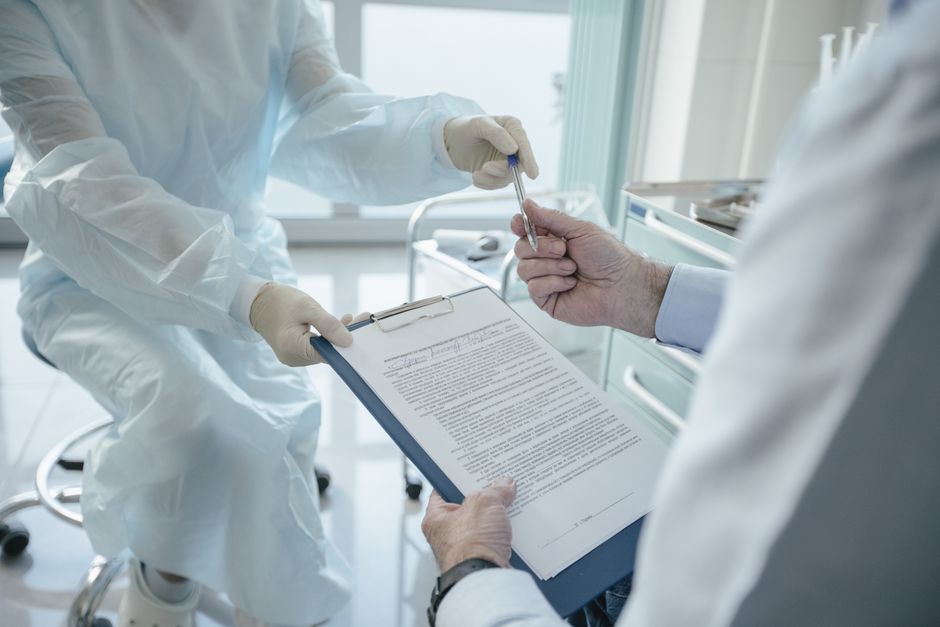
You cannot be enrolled in a study without informed consent. The NIH describes it as a process, not a signature: the research team explains the study’s purpose, how long it’s expected to last, the procedures involved, the risks and potential benefits, and who to contact — and that process continues throughout the study. ClinicalTrials.gov adds that the consent document must also spell out how much of your time the study will take and any payments and costs, which is the detail worth reading closely if you’re there for the money. It’s a conversation, and you’re free to ask questions until you’re satisfied.
Ongoing safety monitoring
Studies are monitored while they run. As ClinicalTrials.gov puts it, a group of experts may oversee what is happening in a study and contact the researchers immediately if they have a safety concern — and if very serious health problems occur, the researchers may stop the study altogether. The sponsor, the IRB, and these monitoring committees all share responsibility for watching participant safety.
What the risks actually are
Safeguards reduce risk. They don’t erase it. The honest list of what you’re weighing:
- Side effects, including unknown ones. You may be taking something whose full effects aren’t yet established — that’s precisely what the research exists to find out. Known side effects are disclosed to you during consent; the genuine uncertainty is in what isn’t known yet.
- No guarantee of benefit. Healthy volunteers aren’t there for treatment at all. And in studies for a condition, the treatment may not work, or you may be in the group receiving a placebo.
- Procedures that are unpleasant even when they’re low-risk. Repeated blood draws, fasting, imaging, or biopsies are common.
- Time and disruption. Multiple visits or overnight stays are a real cost to your life, even when they carry no medical risk.
None of this is meant to be hidden from you — disclosing it is the entire purpose of informed consent. The question isn’t whether risk exists. It’s whether this study’s risks are ones you’re willing to accept, knowing what you’re being asked to do.
How risk varies by phase
Not all trials carry the same uncertainty, and phase is the clearest signal:
- Phase 1 trials are the first tests in humans. Less is known about the treatment, so the uncertainty — and the level of monitoring — is highest. This is also why they tend to pay the most.
- Phase 2 and 3 trials study treatments that are already better understood from earlier testing, so there’s more safety data behind them.
- Phase 4 trials study treatments already approved and on the market.
Higher pay in early-phase trials isn’t free money — it reflects greater unknowns. Knowing which phase a study is in tells you a lot about what you’re weighing.
Your rights as a participant
Three rights are worth committing to memory. The first two are stated plainly by the NIH: taking part in a clinical trial is voluntary, and you are free to withdraw from the study at any time.
- Participation is voluntary. No one can require you to join.
- You can leave at any time, for any reason, without penalty — even after you’ve signed the consent form and started. Tell the research staff so you can stop safely.
- You can ask anything. A good study team welcomes questions — that’s part of informed consent working the way it should.
How to make an informed decision
Before you enroll, it’s reasonable to ask the study team:
- What phase is this trial, and what are the known risks and side effects?
- What exactly will I have to do, and how much time does it take?
- Who do I contact if I have a problem or a question about my rights?
- What happens if I want to stop partway through?
If the answers are clear and the team is transparent, that’s a good sign. If anyone is evasive, pressures you, or skips the consent process, that’s your cue to walk away.
Clinical trials help bring new treatments to everyone, and for the right person they’re a legitimate, well-protected way to earn money for your time. The key is going in informed — which, if you’ve read this far, you already are. When you’re ready, here’s how to find and join paid trials near you, and what they actually pay.